Several months before the previous December
The Affair Begins
[Anna Fox](entity:character-recall-character-anna-fox-5a4dc8b2f3c6) begins an affair with her mentor and colleague [Wesley Brill](entity:character-recall-character-wesley-brill-f2efb2b523e5). The relationship becomes a sustained secret, creating the betrayal at the center of the collapse of her marriage.
About ten days before the Vermont trip
The Separation Decision
[Ed](entity:character-recall-character-ed-4a93f9532b0c) decides that he and Anna should separate, and Anna agrees in principle, though she does not believe the separation will happen so soon. She and Ed conceal the decision from their daughter, [Olivia](entity:character-recall-character-olivia-b40a5119f315), and plan to go ahead with the family vacation.
The previous December
The Vermont Confrontation
The family drives to [Vermont](entity:location-recall-location-9a59ccc239ab) for a ski holiday, stopping at the [Fisher Arms](entity:location-recall-location-9d86f71a63e6) near [Two Pines](entity:location-recall-location-1cfbaa51c919). While [Olivia](entity:character-recall-character-olivia-b40a5119f315) is briefly away, [Ed](entity:character-recall-character-ed-4a93f9532b0c) tells Anna that he cannot continue their marriage and resents the pretense of a happy-family trip.
The previous December after the inn confrontation
The Drive into the Gorge
The family leaves the inn in worsening snow, with Anna driving and [Ed](entity:character-recall-character-ed-4a93f9532b0c) beside her. During the tense journey, Wesley calls; Ed sees his name on Anna’s phone, and their struggle over it distracts her as the road disappears.
The previous December at night
The Family Car Crash
The car plunges into a gorge and comes to rest upside down on a ledge. Anna regains consciousness beside [Ed](entity:character-recall-character-ed-4a93f9532b0c) and [Olivia](entity:character-recall-character-olivia-b40a5119f315), both badly injured, and manages to free them from the wreckage.
The thirty-three hours after the crash
The Blizzard Ordeal
With no phone signal and no way to climb to the road, Anna tries repeatedly to call for help. She keeps [Ed](entity:character-recall-character-ed-4a93f9532b0c) and [Olivia](entity:character-recall-character-olivia-b40a5119f315) warm, gives Olivia small amounts of food and drink, and stays with them through the storm.
About thirty-three hours after the crash
The Rescue and Loss
Rescuers finally reach the family. [Olivia](entity:character-recall-character-olivia-b40a5119f315) is still alive, but [Ed](entity:character-recall-character-ed-4a93f9532b0c) has died from his injuries and exposure; Anna survives with severe physical injuries and the knowledge that she was driving.
The months after the crash through October
A Housebound Recovery
After leaving hospital, Anna develops post-traumatic stress, severe depression, panic attacks, and agoraphobia. She becomes increasingly confined to her [Harlem](entity:location-recall-location-f793709c16a7) townhouse, separated from [Olivia](entity:character-recall-character-olivia-b40a5119f315), who lives with [Ed](entity:character-recall-character-ed-4a93f9532b0c)’s family, while [Dr. Julian Fielding](entity:character-recall-character-dr-julian-fielding-8868a8fdf229) treats her.
Sunday, October 24
Anna Watches the Millers
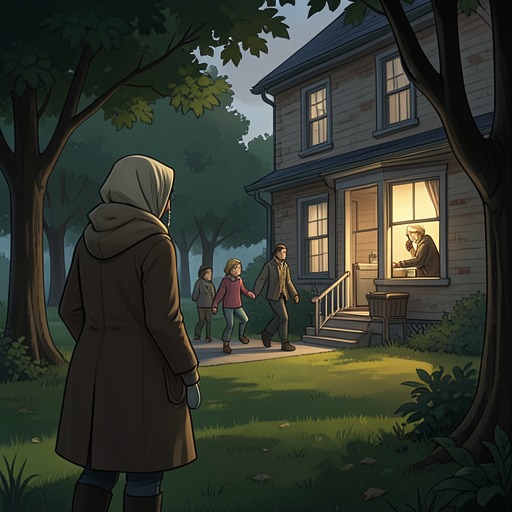
From her window, Anna watches her neighbor Rita Miller and a contractor begin an apparent affair. When Rita’s husband, Dr. Miller, unexpectedly returns early, Anna photographs the near-discovery but chooses not to intervene.
Monday, October 25
The Russells Arrive
Anna notices a family moving into the house across the park: [Alistair Russell](entity:character-recall-character-alistair-russell-17c9e560e373), his wife, and their teenage son, [Ethan Russell](entity:character-recall-character-ethan-russell-b8d868cc2a50). During a call with [Ed](entity:character-recall-character-ed-4a93f9532b0c) and [Olivia](entity:character-recall-character-olivia-b40a5119f315), she admits that she wishes they were still with her.
Tuesday, October 26
Anna Catalogues Her House
Anna mentally inventories the townhouse she once shared with [Ed](entity:character-recall-character-ed-4a93f9532b0c) and [Olivia](entity:character-recall-character-olivia-b40a5119f315), from the rented basement apartment to the rooms that still hold their family memories. The exercise reveals how thoroughly her home has become both refuge and confinement.
Wednesday, October 27
The Tenant and the Mirror
Anna watches the new neighbor’s house through her camera and later speaks with her basement tenant, [David](entity:character-recall-character-david-a0465b0b2f3d), who is leaving for Brooklyn. After he goes, she studies her aging body and remembers [Ed](entity:character-recall-character-ed-4a93f9532b0c) once calling her the girl next door.
Thursday, October 28
Anna Maps the Neighborhood
Anna researches the Russells and surveys the other nearby households from her windows. She also meets with [Bina](entity:character-recall-character-bina-94196bc8352a) for painful physical therapy and reflects on how little she knows the people whose lives she routinely watches.
Friday, October 29
The Agora and the Umbrella
Anna spends time on the [Agora](entity:organization-recall-organization-agora-30f5c7000d74), where she offers support to people with anxiety, and talks with Sally about recovery. She also describes [Dr. Julian Fielding](entity:character-recall-character-dr-julian-fielding-8868a8fdf229)’s exposure exercises: using [Ed’s umbrella](entity:object-recall-object-ed-924cb0599713), she has managed a few brief steps into the garden but cannot sustain them.
Saturday, October 30, before evening
A World Seen Through Windows
A storm and the sight of neighbors going about their lives prompt Anna to revisit memories of the films and shared rituals that once connected her to [Ed](entity:character-recall-character-ed-4a93f9532b0c). She remains indoors, observing the street as if it were another screen.
Saturday, October 30, late afternoon
Ethan Brings a Candle
[Ethan](entity:character-recall-character-ethan-e5b91d8192a9) arrives with a lavender candle that his mother has asked him to deliver. Anna welcomes him, and they talk about his move from [Boston](entity:location-recall-location-ccccb9ca0ba9), homeschooling, swimming, and how much he misses his friends.
Saturday, October 30, during Ethan’s visit
An Unexpected Connection
[Ethan](entity:character-recall-character-ethan-e5b91d8192a9) comforts himself with Anna’s cat and borrows the old film Night Must Fall. Anna finds that conversation with him brings back her instincts as a child psychologist, even as she recognizes that she has become overly isolated from real human contact.
Saturday, October 30, late night
Anna Sees Ethan at His Window
After searching online for former child patients, Anna speaks with [Ed](entity:character-recall-character-ed-4a93f9532b0c) and asks about [Olivia](entity:character-recall-character-olivia-b40a5119f315). Across the park, she sees [Ethan](entity:character-recall-character-ethan-e5b91d8192a9) undress in the bedroom that faces her own and immediately looks away.
Sunday, October 31, Halloween evening
Eggs at the Door
While Anna watches a film, children throw eggs at her front door and windows. She tries to confront them from inside, but panic overwhelms her; in a burst of anger and fear, she opens the door and collapses outside.
Sunday, October 31, immediately after the collapse
Jane Helps Anna
A woman from across the park helps Anna back into her house and gives her water and brandy. Anna assumes the woman is [Jane Russell](entity:character-recall-character-jane-russell-d187ab59719a), and the woman does not correct her; she asks about Anna’s agoraphobia and stays long enough to comfort her.
Monday, November 1
Anna Reaches Lizzie
On the [Agora](entity:organization-recall-organization-agora-30f5c7000d74), Anna meets GrannyLizzie, an elderly Montana teacher who has been unable to leave home since her husband died. Anna shares her first name and helps [Lizzie](entity:character-recall-character-lizzie-e45debe8b469) begin talking about her grief and isolation.
Monday, November 1, later that day
The Roof Garden Revealed
Anna asks [David](entity:character-recall-character-david-a0465b0b2f3d) to inspect a damp ceiling, and he climbs through the roof hatch to discover that their overgrown rooftop garden threatens the skylight. The garden, once a memorial project for Anna’s parents, has become another forgotten part of her former life.
Tuesday, November 2
Therapy and Medication
In a session with [Dr. Julian Fielding](entity:character-recall-character-dr-julian-fielding-8868a8fdf229), Anna revisits the [Vermont](entity:location-recall-location-9a59ccc239ab) trip and blames herself for the family’s separation. Fielding adjusts her medication, while Anna privately recognizes that she has been mixing pills with alcohol and taking them inconsistently.
Tuesday, November 2, afternoon
Jane Notices the Camera
While photographing the neighborhood, Anna sees the woman she believes is Jane looking directly back at her and waving. Ashamed, Anna recognizes that her camera has made her a watcher who is not invisible to the people she watches.
Tuesday, November 2, shortly after the wave
Jane’s Long Visit
The woman Anna believes to be Jane comes over with wine, embraces Anna, and spends hours talking and playing chess with her. They discuss families, loneliness, sailing, and Anna’s agoraphobia; Jane urges her to look at the world rather than miss it.
Tuesday, November 2, evening
Alistair Questions Anna
After Jane leaves, Alistair visits and asks whether Anna has had company. Anna says she has been alone, concealing Jane’s visit, and Alistair notices the chessboard; when he hears that [Ethan](entity:character-recall-character-ethan-e5b91d8192a9) delivered the candle, he reacts with surprise.
Wednesday, November 3, late afternoon
The Scream Across the Park
Anna hears a woman scream from the [Russell house](entity:location-recall-location-russell-house-6d7612eb73e8) and calls [Ethan](entity:character-recall-character-ethan-e5b91d8192a9). He says his father lost his temper, but insists everything is fine. When Anna calls Alistair, he denies hearing any scream and dismisses her concern.
Wednesday, November 3, early evening
Ethan Seeks Refuge
[Ethan](entity:character-recall-character-ethan-e5b91d8192a9) crosses the park to Anna’s house in tears, saying his father was yelling and he needed to get away. Anna comforts him and gives him her phone number, telling him he can call whenever he needs help.
Wednesday, November 3, late night
Anna Writes Jane’s Name
After drinking and reflecting on the recent events, Anna fixates on the woman she believes is Jane. In the shower, she finds that she has written [Jane Russell](entity:character-recall-character-jane-russell-d187ab59719a)’s name repeatedly on the glass, a sign that her thoughts and medication use are becoming difficult to control.
Thursday, November 4, evening
The Knife in the Window
While drunk and watching a film, Anna sees the woman she believes is Jane appear in the Russell parlor with a blade in her chest. The woman reaches toward Anna before falling from view, and Anna scrambles to summon help.
Thursday, November 4, shortly after 10:30 p.m.
Anna Calls 911
Anna calls 911 to report that her neighbor has been stabbed, then leaves the house carrying an umbrella and house key in an attempt to reach her. She makes it across the park before collapsing in [Hanover Park](entity:location-recall-location-hanover-park-fa7108505bda), where emergency responders find her unconscious.
Friday, November 5, morning
The Hospital Interview
At [Morningside Hospital](entity:location-recall-location-morningside-hospital-d581b3418095), [Detective Little](entity:character-recall-character-detective-little-e6f99608f71e) questions Anna after she wakes from sedation. She insists that Jane has been stabbed, but Little says Jane is safe; Anna’s panic and intoxication leave the detective uncertain about what she witnessed.
Friday, November 5, later that day
The Russells Deny Jane’s Visit
[Detective Little](entity:character-recall-character-detective-little-e6f99608f71e) brings Anna home, where Detective Norelli and Alistair question her account. The woman introduced as Jane arrives, but Anna has never seen her before; [Ethan](entity:character-recall-character-ethan-e5b91d8192a9) says the woman is his mother, and Anna is left doubting her own memory.
Friday, November 5, after the police leave
Anna Suspects Ethan Is Afraid
Alone again, Anna replays [Ethan](entity:character-recall-character-ethan-e5b91d8192a9)’s hesitation and concludes that he lied about the woman being his mother. She calls [Bina](entity:character-recall-character-bina-94196bc8352a), who listens but questions whether [Anna’s medication](entity:object-recall-object-anna-728ccce6e53f) and drinking may have distorted her perceptions.
Saturday, November 6
The Photograph and the Portrait
[Anna and Bina](entity:relation-recall-relation-fea2cd6f83cd) search online for evidence that the woman Anna knew exists, but find no clear record of her. Anna remains convinced the Russells are hiding something, especially when the family closes the blinds.
Saturday, November 6, night
The Apparent Murder Returns
In a disoriented, alcohol-fueled state, Anna again sees the woman she calls Jane bleeding in the [Russell house](entity:location-recall-location-russell-house-6d7612eb73e8). This time the experience feels like a replay of the thriller imagery she has watched, deepening the uncertainty between what she observes and what she imagines.
Saturday, November 6, after Anna returns home
The Police Reject Anna’s Account
The police and the Russells insist that no stabbing occurred and that the woman in the house is Alistair’s wife. Anna believes [Ethan](entity:character-recall-character-ethan-e5b91d8192a9)’s body language reveals fear, but her alcohol use and distressed state make her account easy to dismiss.
Saturday, November 6, later that day
Anna Questions David
Anna enters [David](entity:character-recall-character-david-a0465b0b2f3d)’s basement apartment without permission and asks whether he has met the woman across the park. David denies meeting her and angrily confronts Anna for invading his private space.
Saturday, November 6, evening
David Reveals His Prison Past
[David](entity:character-recall-character-david-a0465b0b2f3d) apologizes for his anger and tells Anna that he served fourteen months in prison for assault. Anna accepts his apology, and their conversation turns intimate; he kisses her, and they have sex in [Olivia](entity:character-recall-character-olivia-b40a5119f315)’s bedroom.
Sunday, November 7, morning
The Earring and the Box Cutter
Anna wakes in [Olivia](entity:character-recall-character-olivia-b40a5119f315)’s bed, unsettled by having slept with [David](entity:character-recall-character-david-a0465b0b2f3d). She notices that the toolbox is open and sees a box cutter inside, then recalls a three-pearl earring she glimpsed in David’s apartment and starts linking both objects to the suspected attack.
Sunday, November 7, later that day
Anna Investigates Alistair’s Job
Using Skype, Anna contacts Alistair’s former workplace and learns that his transfer to New York fell through after he was terminated. His former assistant has never met Jane, adding another unsettling gap in the family’s public story.
Monday, November 8
Anna Returns to the Coffee Shop
Anna follows the woman she believes to be Jane to a neighborhood coffee shop, using an umbrella and keeping her eyes mostly closed to manage the outside world. She confronts the woman, who identifies herself as Jane and threatens to call the police.
Monday, November 8, immediately afterward
Nick Walks Anna Home
Nick Takeda finds Anna overwhelmed in the coffee shop and escorts her home. On the way, Anna learns that his family has not visited the Russells and realizes that her assumptions about who knows them may be wrong.
Monday, November 8, at Anna’s house
Ethan Admits He Is Scared
[Ethan](entity:character-recall-character-ethan-e5b91d8192a9) appears outside Anna’s open door and helps her inside. When she asks about the woman, he first repeats that she is his mother, then admits that he is scared and leaves before explaining further.
Tuesday, November 9, around midday
The Photograph of Anna Asleep
An email from an account using [Jane Russell](entity:character-recall-character-jane-russell-d187ab59719a)’s name arrives with a photograph of Anna asleep in her bed, timestamped at 2:02 a.m. Anna fears that someone has entered her home and photographed her without consent.
Tuesday, November 9, later that day
The False Resolution
[Detective Little](entity:character-recall-character-detective-little-e6f99608f71e) and Norelli find no sign of a break-in and suggest Anna sent the image to herself. When Anna’s portrait of herself, supposedly drawn by Jane, also fails to persuade them, she begins to doubt her own memories again.
Wednesday, November 10
Anna Tells Lizzie the Truth
Anna resumes chatting with [Lizzie](entity:character-recall-character-lizzie-e45debe8b469) and helps her manage practical problems after her husband’s death. In turn, Anna reveals that [Ed](entity:character-recall-character-ed-4a93f9532b0c) and [Olivia](entity:character-recall-character-olivia-b40a5119f315) died in the crash and that she drove the car off the road.
Thursday, November 11
Anna’s Birthday and Retreat
On her birthday, Anna deletes messages from most of her online support group and tells [Lizzie](entity:character-recall-character-lizzie-e45debe8b469) that her family died. She also withdraws from [Bina](entity:character-recall-character-bina-94196bc8352a) and [Dr. Julian Fielding](entity:character-recall-character-dr-julian-fielding-8868a8fdf229), retreating further into grief and isolation.
Wednesday, November 10, recalled later
Wesley Calls Back
Wesley finally returns Anna’s call, but he focuses on the affair and his wish to put it behind them rather than offering the connection she sought. Anna realizes that she no longer wants anything from him and ends the call.
Friday, November 12
Ethan Visits Again
[Ethan](entity:character-recall-character-ethan-e5b91d8192a9) visits Anna and returns Night Must Fall, which he enjoyed. Anna apologizes for involving him and tells him that [Ed](entity:character-recall-character-ed-4a93f9532b0c) and [Olivia](entity:character-recall-character-olivia-b40a5119f315) are dead; she also offers him access to [David](entity:character-recall-character-david-a0465b0b2f3d)’s now-empty basement apartment as a refuge.
Saturday, November 13, morning
Anna Reopens the House
Feeling somewhat stronger, Anna showers, dresses in jeans, and opens the curtains throughout her house. She tries to limit her drinking and decides not to watch the Russells, imagining that she may be ready to reclaim ordinary routines.
Saturday, November 13, evening
A New Theory About Jane
While playing chess, Anna wonders whether the woman she knew as Jane could have been real but not the woman in the [Russell house](entity:location-recall-location-russell-house-6d7612eb73e8). The possibility reframes the identity mystery without resolving whether Anna’s earlier experiences were genuine.
Saturday, November 13, night
Bina Demands an End
Anna tells [Bina](entity:character-recall-character-bina-94196bc8352a) that she is still considering the woman’s identity. Bina insists that the woman did not exist and asks Anna to promise she will stop pursuing the story; Anna agrees outwardly, though she is still uncertain.
Sunday, November 14, after midnight
Ethan Returns at Night
During a storm, [Ethan](entity:character-recall-character-ethan-e5b91d8192a9) appears in Anna’s bedroom and admits that he has been entering the house at night. He reveals that he stole her key, copied it, and has watched her sleep and move through the house.
Sunday, November 14, during the night
Ethan Confesses to Katie’s Murder
[Ethan](entity:character-recall-character-ethan-e5b91d8192a9) explains that [Katie](entity:character-recall-character-katie-ed095a72a18d), his biological mother, visited him after he was adopted. He admits that he killed her with a letter opener after she continued trying to contact him, and says his adoptive parents helped conceal her death.
Sunday, November 14, continuing into the night
Ethan Threatens Anna
[Ethan](entity:character-recall-character-ethan-e5b91d8192a9) tells Anna that he created the [Lizzie](entity:character-recall-character-lizzie-e45debe8b469) account, used her advice about passwords to access her phone and computer, and sent the sleeping photograph to frighten her. He threatens to kill her and disguises his menace as a request for psychological analysis.
Sunday, November 14, moments later
Anna Fights Back
Anna kicks [Ethan](entity:character-recall-character-ethan-e5b91d8192a9) hard enough to knock him down, escapes her bedroom, and runs through the dark house. With Ethan pursuing her, she chooses the stairs to the roof rather than risk being trapped below.
Sunday, November 14, during the storm
The Rooftop Struggle
On the overgrown roof, Anna faces [Ethan](entity:character-recall-character-ethan-e5b91d8192a9) with gardening shears. He attacks her and threatens to throw her from the roof, but she tells him that his biological father loved [Katie](entity:character-recall-character-katie-ed095a72a18d) and him, briefly unsettling Ethan.
Sunday, November 14, around 2 a.m.
Ethan Falls Through the Skylight
Anna embraces [Ethan](entity:character-recall-character-ethan-e5b91d8192a9), then uses her weight to push him onto the skylight. The glass gives way beneath him, and he falls into the house, where Anna sees his body below before walking away from it.
Sunday, November 14, immediately after Ethan’s fall
Anna Calls the Police
Anna descends through the rain-soaked house and enters the kitchen. She plugs in the landline and calls [Detective Little](entity:character-recall-character-detective-little-e6f99608f71e) to report what has happened, ending the immediate danger and bringing the truth about [Katie’s murder](entity:event-recall-event-katie-s-murder-4bc7d2464135) into the open.
Six weeks later
The Investigation Confirms the Crime
After police investigate, Alistair is arrested and charged as an accessory to murder; he confesses that the events happened as [Ethan](entity:character-recall-character-ethan-e5b91d8192a9) described. The Russells’ home stands empty, while Anna learns that the woman she met was [Katie](entity:character-recall-character-katie-ed095a72a18d), Ethan’s biological mother.
The six weeks after Ethan’s death
Anna Begins to Stabilize
Anna resumes treatment with [Dr. Julian Fielding](entity:character-recall-character-dr-julian-fielding-8868a8fdf229), takes her medication properly, stops drinking, and has the house cleaned and the skylight repaired. She reconnects with the [Agora](entity:organization-recall-organization-agora-30f5c7000d74) but gradually ends her imagined conversations with [Ed](entity:character-recall-character-ed-4a93f9532b0c) and [Olivia](entity:character-recall-character-olivia-b40a5119f315).
Six weeks later, after a snowfall
Anna Steps into the Garden
With [Bina](entity:character-recall-character-bina-94196bc8352a) beside her, Anna reaches the garden door and faces the cold and open air. Remembering that she survived the storm and fought for her life on the roof, she closes her eyes, opens them, and finally steps outside.